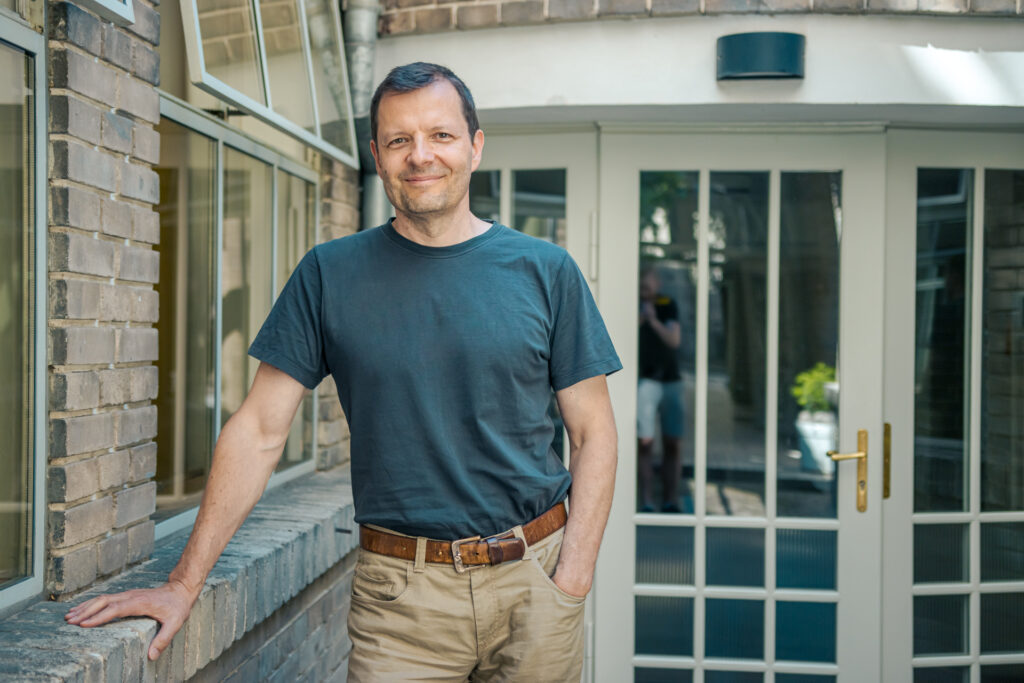
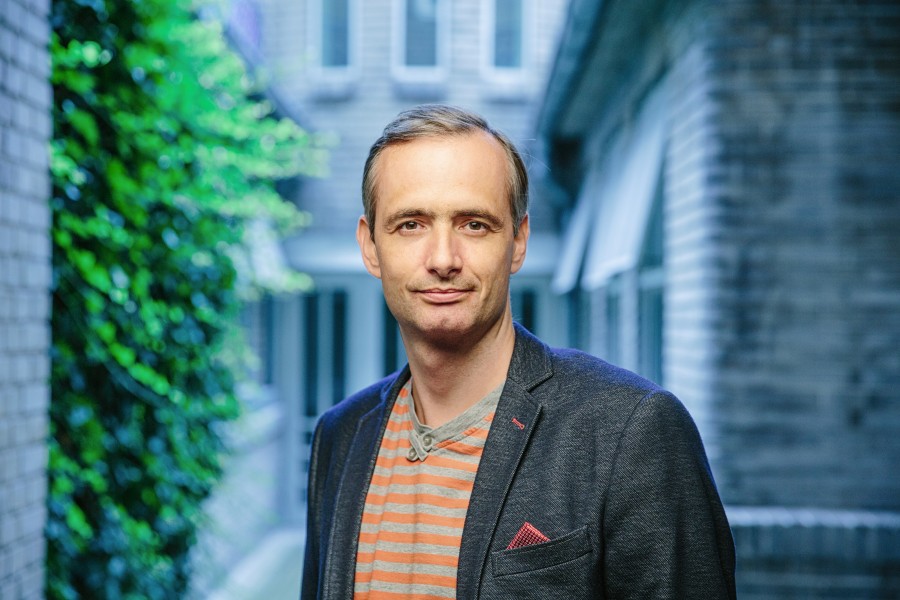
Pavel is one of the founders of Opera and currently sets the direction for the entire project. He is a Renaissance man, engaged in a variety of activities in both his professional and personal life. In the interview, among other things, he reflected on Opera’s more than six years of operation and outlined its possible future direction.

Opero marked its 6th anniversary in November, and now in January we finally celebrated it. How did you enjoy the birthday party?
It was great. After such a long time, we were finally able to invite all our members, partners, friends—everyone who makes Opero what it is. We last celebrated our anniversary in 2019; in the years since, circumstances didn’t allow for it.
What are your memories of Opera’s early days? And could you tell us how the idea to start a business hub came about in the first place?
In Prague, we lacked a space that would allow us to meet and work, but with a focus on the older community—a place in the city center, of high quality and with good service, operating on the principle of a shared office and coworking space. At the same time, the idea was that we would function as a community center that creates content, develops topics for discussion, and brings them into the public sphere. Over the past six years, this vision has, of course, evolved quite significantly, and we’ve also launched mentoring programs and other initiatives.
How do you look back on the past year, both personally and for Opero?
I’ll go on a bit. The last three years have been challenging for Opero, since it’s a space built around people meeting and then sharing ideas and opportunities. That aspect suffered particularly during the pandemic. Hopefully, 2022 was a transitional year back to what I love most about Opero. But at the same time, it was also a more difficult year, especially from an economic standpoint and due to other uncertainties. In many ways, however, it marks a return to normalcy and a new sense of hope, as many new things are taking shape; therefore, I am looking forward to 2023 with optimism.
In what ways has this six-year experience enriched you the most, and what have you learned?
So many things. I think that since we started, we’ve managed to attract a lot of people, and we’ve made it clear that we want to be a „melting pot“ for different worlds and communities—that we want to be a place where issues important to our country’s development are discussed across various sectors, including business, government, academia, and civil society. We’ve managed to establish various collaborations with many partners; I’ve met hundreds of interesting people and heard hundreds of interesting ideas and insights. It’s a great source of inspiration for me, and it really energizes me.
Can you tell us what has been the biggest challenge for you during Opera's existence?
I’ll say it again, but it was that three-year period when no one knew whether it would last months or years. It was a constant challenge that took its toll. By the end of 2019, we’d come up with a lot of ideas, but quite a few of them ended up on the back burner or straight in the trash due to the situation, which is a shame. Even though it took more than it gave, it did bring some new things.
The events organized by Opero and other activities (e.g., programs) is aimed at realizing the vision of what’s known as a “modern Czech Republic.” Could you elaborate on that? What topics would you like to focus on in the future, and what events are planned?
Our activities can be divided into several pillars. First, we’re a place where people can meet and work—a professional and welcoming space in the center of Prague. Then there are our content and programming activities. Above all of this is the community—or, more specifically, connection. Specifically regarding the content—we’re here to discuss the future, not the past. “Modern Czechia” sounds very nationalistic, but by that we mean not just the Czech Republic and Prague, but the future of humanity and Europe in general… We want to offer formats that contribute to the development of the country and society, primarily in business (topics such as ESG, climate change, or the so-called “second economic transformation”), but also in education, science, and digitalization… everything is interconnected. As for specific upcoming events, we’re planning, for example, the third annual conference FutureEdu or another event in the series Society 4.0.
You're also behind the mentoring programs Let's do it! a Ment2Grow. How would you assess how they've been performing so far? Could you share any plans, perhaps for this year?
As for Ment2Grow, which is currently in its fifth year, the second to be organized entirely under the auspices of Opera. We want to help growing and promising B2B startups expand, particularly by enabling them to connect with potential partners, clients, and investors, both in the Czech Republic and abroad (For more information about the Ment2Grow program, see, for example, this article). I view recent developments positively—we’ve gained many partners (we work closely with the Czech Founders community on the program, as well as with corporate partners such as T-Mobile, Google, and Česká spořitelna), and every year we expand our lineup of events, produce our own podcast, and more. Our mission is to help the entire ecosystem—ideally—so that world-class companies can emerge here, and I believe the Czech Republic is well on its way to becoming one of Europe’s technology hubs.

Program Let's do it! It was launched in response to the impacts of the COVID-19 crisis; we wanted to help affected businesses restructure their operations and develop a new strategy. We were clearly successful in doing so for hundreds of companies. At the same time, however, we discovered that the need for education in business topics is long-term, and entrepreneurs don’t have many opportunities in this area. If an entrepreneur wants to be successful in the long term, they need to stay up to date. They should „go back to school“ several times throughout their career. But no such institution exists, and this led to a long-term vision: we want to turn DoToho! into a lifelong business university for the SME segment—a platform where business owners can return time and again to gain know-how and inspiration. Among entrepreneurs of this type, we’d like to foster a culture that recognizes the need for education and the importance of sharing information with one another—which contributes to the growth of all parties involved. Another key issue is digitalization—helping companies transition into the digital world—which is probably our biggest focus right now. We’ve just begun writing the next chapter with our entry into the program Strive Czechia, which is designed to contribute to the digitization of micro and small businesses. We play the role of those who provide training for entrepreneurs as part of this initiative. Our goal for the next three years is to increase DoToho!’s capacity fivefold, expand our reach nationwide, and become self-sustaining—no longer dependent on sponsors and grants.
You’re also involved in providing financial support to startups. As an investor, where do you think entrepreneurs and startups should be focusing their efforts, where are the current opportunities for them, and what kind of startups or small businesses are missing from the Czech scene?
I’m a highly focused investor; I invest only in tech startups. I’m not exactly an investment advisor, but I think there’s potential, for example, in businesses emerging around the Green Deal and everything related to it (energy, agriculture). By the way, it’s a shame that we in the Czech Republic have fallen a bit behind in this area.
For example, you wrote:. a book on American politics, you taught at a university, worked with the organization People in Need on a mission in Afghanistan for over a year and on several short-term missions, and at the same time, you spent many years in management consulting… Do you draw on these experiences in your current work or in your life in general?
In short—definitely yes. I’ve dabbled in a variety of things, so I have a broad range of interests; I like a little bit of everything, which is perhaps reflected a bit in Opera as well. And, of course, I have contacts in all those fields, which comes in handy.
What else do you do in your free time?
It’s the same old story with me—I do a lot of things, but nothing very well. 🙂 When it comes to sports, I mostly go rock climbing, and I also play squash, ski, snowboard, and ride a bike… I love spending time in nature. I enjoy playing the guitar around a campfire, or playing the violin at Rybovka in the church. I’m also involved in community activities; for example, I’m active in a foundation Open Society Fund, in various mentoring programs…
What is your fondest memory related to Opera?

The first thing that came to mind were the trips with our great team, which is very close-knit—not just professionally, but on a personal level as well. So we spend quite a bit of time together outside of work, and sometimes people are surprised that we go on, say, a week-long vacation together. I remember our hiking trips in the mountains—whether in Corsica, Slovenia, or Austria—and how we hike there and have fun—that’s what life is all about.